


Chicken Biryani Recipe
PAKISTANI CHICKEN BIRYANI RECIPE (THE BEST!)

“I have tried several biryani recipes, none come near this one. Thank you for sharing this gem!”
RAHUL
It took me absolutely no effort to bring you this biryani recipe. All I had to do was find the best biryani in Houston, dissect it, hound poor Rizwan for details, perform 10+ trials, use the concepts in Salt Acid Fat Heat to further perfect it, survey my email list for preferences, interpolate to figure out spice quantities, and you know…cry a little.
In short, I literally ate, slept, and breathed biryani until I could proudly publish this most-beloved, highly requested recipe and do it justice. Phew. Let’s do this.
WHAT IS BIRYANI?
Biryani is an intricate rice dish made with layers of curried meat and rice. Given its use of adornments and luxurious finishes, it’s no surprise that biryani has roots in Persian cuisine.
There are two main methods of making biryani:
- Kachi (raw) biryani, made with raw meat and parboiled rice and cooked together, and
- Pakki (cooked) biryani, in which cooked meat and parboiled rice are steamed together.
In Pakistan, pakki (or cooked) biryani is most common, with several prominent varieties such as Sindhi, Karachi-style, and Bombay biryani. This recipe is an amalgamation of these styles and is similar to what you’d find at a typical Pakistani or Indian restaurant or dinner party.
NOTES ON THE INGREDIENTS FOR CHICKEN BIRYANI
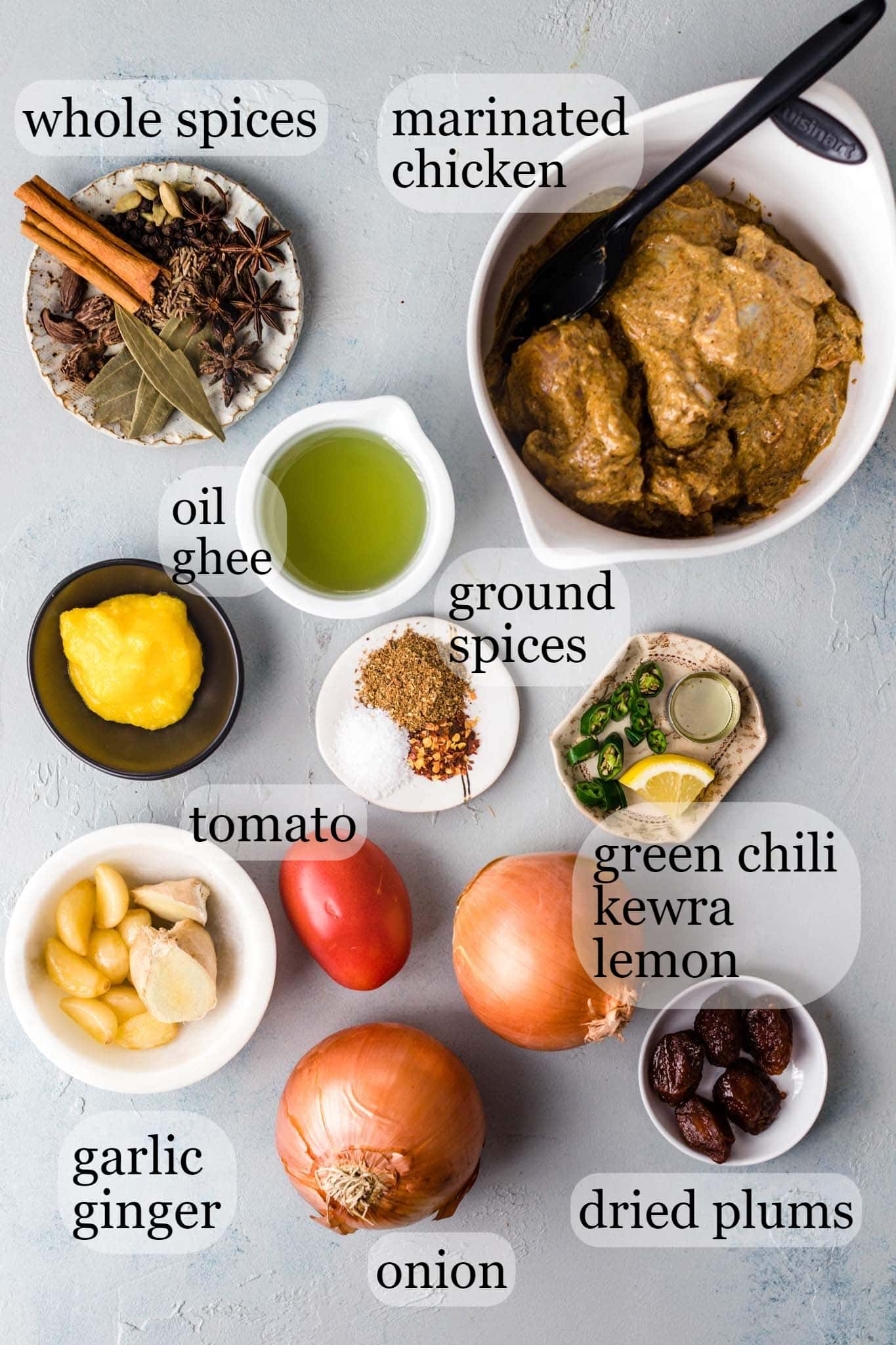
I’ve intentionally chosen the ingredients and quantities to give this biryani a strong foundation. That said, this recipe can take quite a bit of substitutions and adaptations and still be excellent.
- Oil/Ghee: I’ve used oil for fluidity and ghee for taste.
- Onions: You can either thinly slice them (more traditional) or finely chop. If using a food processor to do this, pulse to chop so that it doesn’t blend into a paste.
- Bone-in, cut up, skinless chicken: I buy pre-cut up pieces of a whole chicken, but bone-in chicken thighs work too. You can also use boneless chicken, though it may require a shorter cooking time.
- Whole spices: A generous amount of whole spices are a distinct characteristic of biryani. Whole spices are meant to be discarded while eating, but if you don’t want to bite into them, feel free place them in a spice/muslin bag.
- Garlic + Ginger: I’ve given their quantities in whole form and tablespoons. I use a mortar and pestle or a food processor to crush them.
- Tomatoes: Since biryani has lots of sour ingredients like yogurt, dried plums (alu Bukhara), and lemon, I’ve found keeping the tomatoes to a minimum gives it just the right amount of tang.
- Yogurt: Not only does a yogurt marinade make the chicken more tender and flavorful, but it also makes cooking the biryani much smoother. For a dairy-free option, try using coconut milk.
- Rice: I suggest using aged, long-grain basmati rice you can find at some grocery stores, any Indian/Pakistani specialty store, or online.
- Dried Plums (Alu Bukhara): I always cherish the helping of biryani with these sweet surprises. Alu Bukhara are often used in biryani to give a sweet, tangy taste. They’re usually available at South Asian grocery stores, but if you can’t find them, you can either substitute with dried prunes or omit.

0 Comments